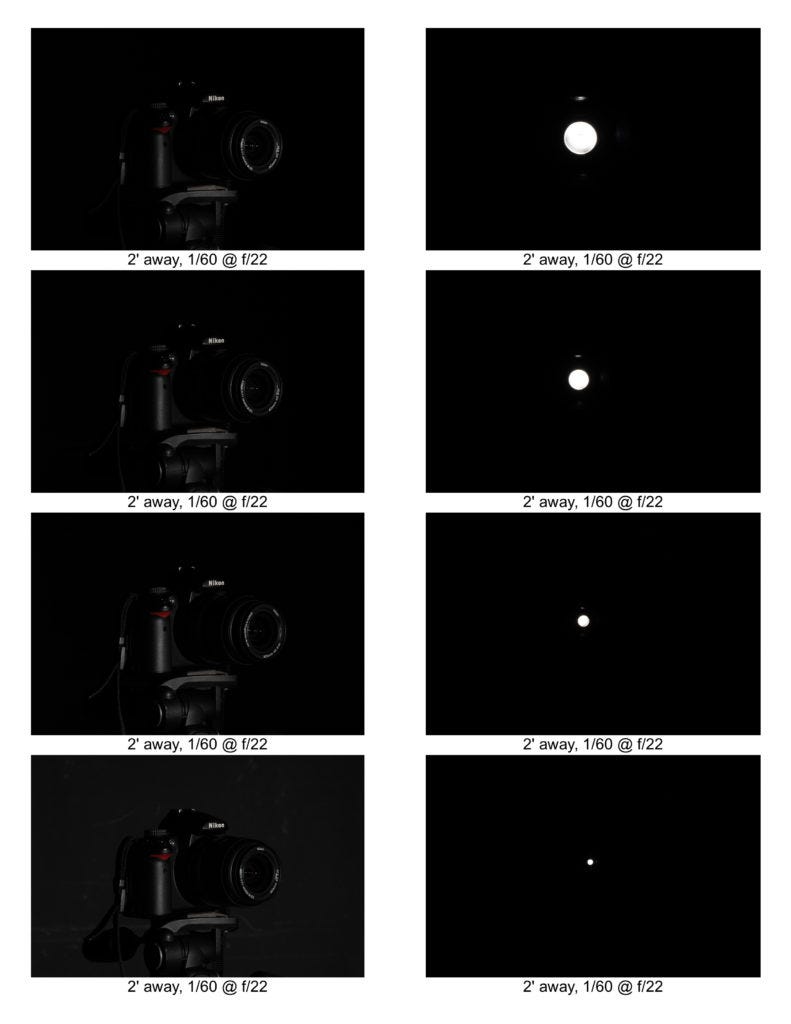
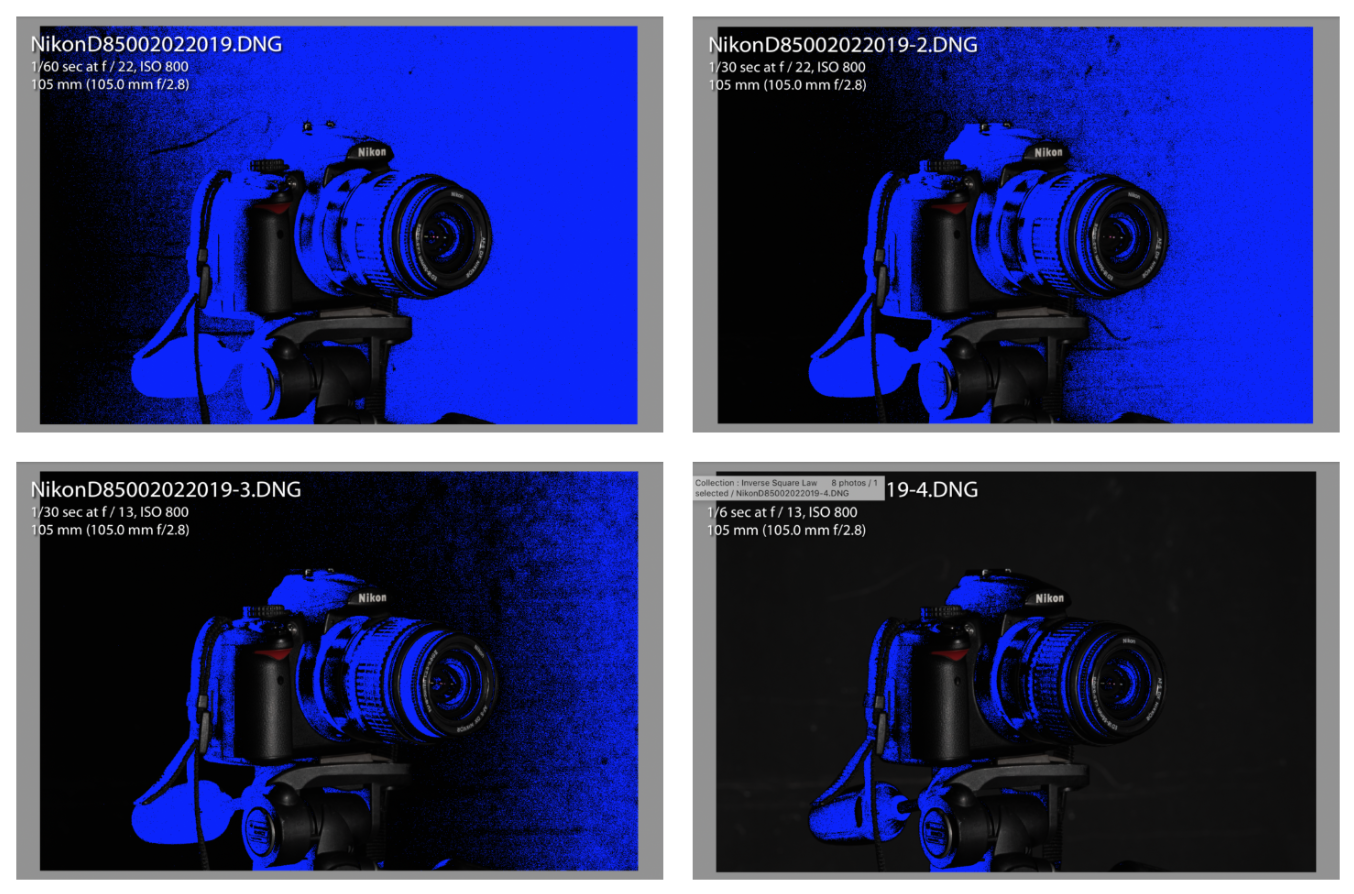
In the photographs made by the D850, it's clear to see the darkest shadows opening up more the further the small light source gets, as shown by the shadow clippings in Lightroom below.
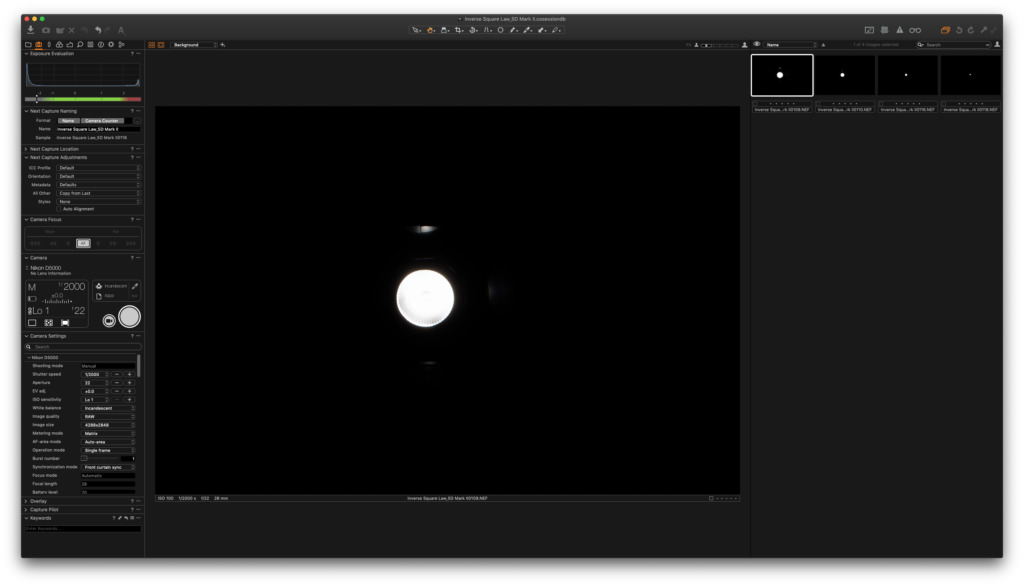
In the photographs of the light source made by the Nikon D5000, it's apparent that the light source is getting 75% smaller, and consequently, we are left with 25% of the light from the previous shot. To accommodate for this loss of light, we need to let in twice as much light.
One thing that surprised me was the jump from 8 feet to 16 feet. In the photograph of the subject at 8 feet, the background is still hardly visible, mostly dark shadows. At 16 feet, the background, although still dark, is almost completely visible.
No comments:
Post a Comment