April 30, 2019
April 25, 2019
March 8, 2019
March 5, 2019
February 24, 2019
February 21, 2019
Ephemera
![]() |
| From Olive Juice, by Damien Maloney and Molly Matalon |
![]() |
| From Tones of Dirt and Home, by Mike Brodie |
![]() |
| From Deep Springs, by Sam Contis |
![]() |
| From Deep Springs, by Sam Contis |
![]() |
| From Mossless 4, photograph by Namsa Leuba |
February 12, 2019
Exercise #2: Flash Progressions
Rigorously explore the exposure capabilities of the strobe. By adjusting the power of the strobe, as well as your camera's shutter speed and F stop, you will create a series of pictures that demonstrate how you can control the exposure with the strobe. Your post should follow the templates below.
![]() |
| Maintain consistent exposure by adjusting strobe |
![]() |
| Set strobe to minimum power and adjust aperture |
![]() |
| Set strobe to maximum power and adjust aperture |
![]() |
| Adjust strobe to create varied exposures at widest aperture |
![]() |
| Adjust strobe to create varied exposures at narrowest aperture |
![]() |
| Set strobe to same power as image #1 and adjust shutter speed |
![]() |
| Set strobe to same power as image #1 and adjust shutter speed; turn on overhead light |
![]() |
| Set strobe to same power as image #1 and adjust shutter speed; turn off overhead light and turn on modeling light |
![]() |
| Screenshot of Capture One |
| Setup |
February 6, 2019
Exercise #1: Inverse-Square Law
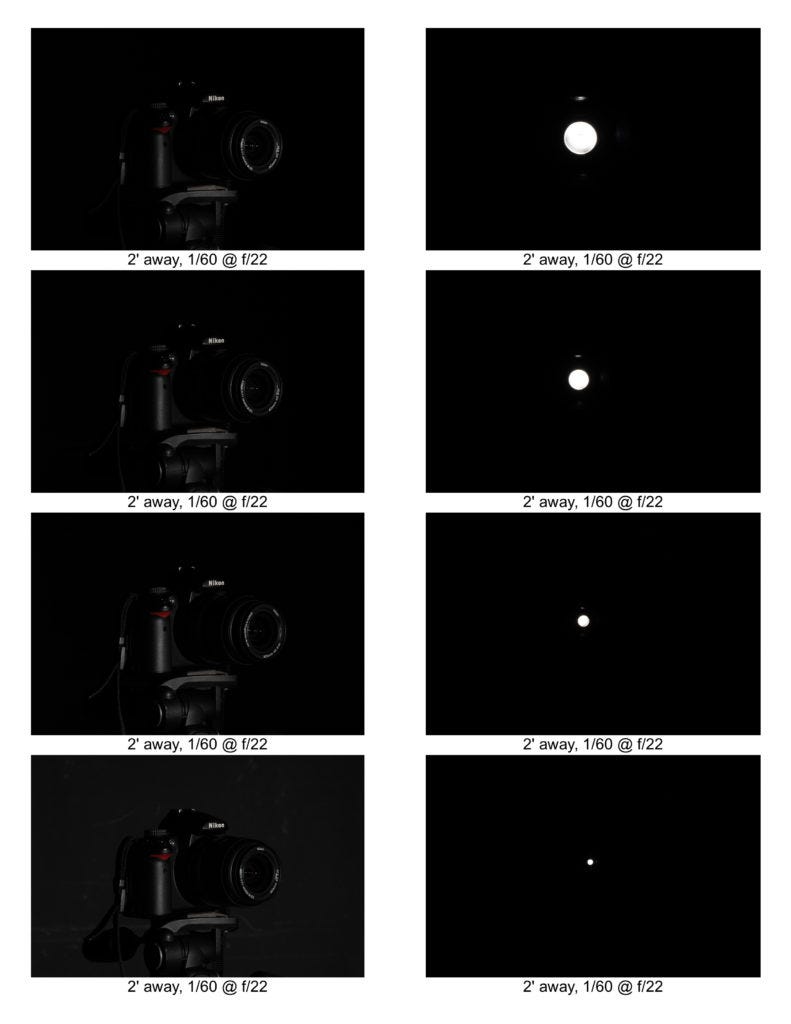
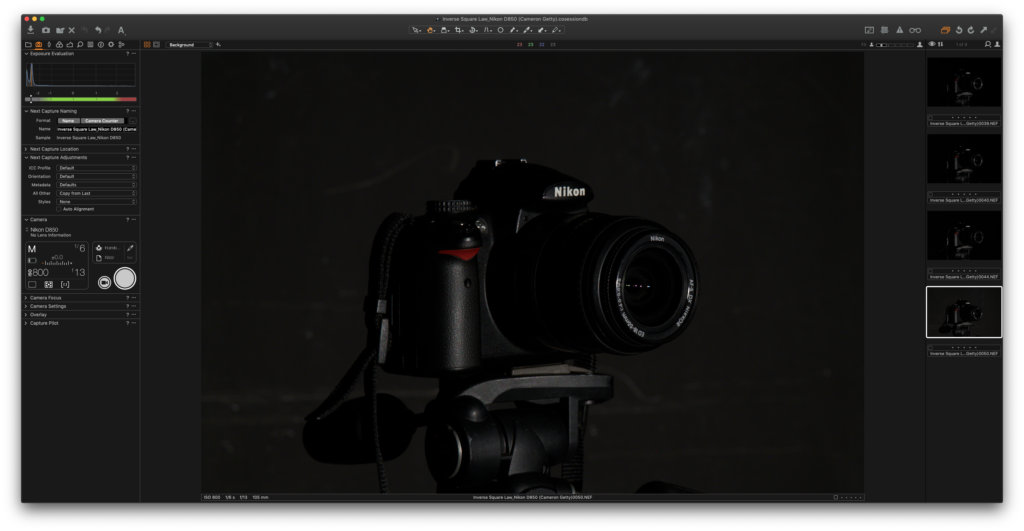
To demonstrate the inverse-square law, I set up two cameras and one light source in the studio. I used the hot light to light the subject [Nikon D5000] while I photographed the subject with the Nikon D850. From my understanding of the inverse-square law, each time we double the distance from the lens to the light, we need to expose two stops more to accommodate for the falloff.

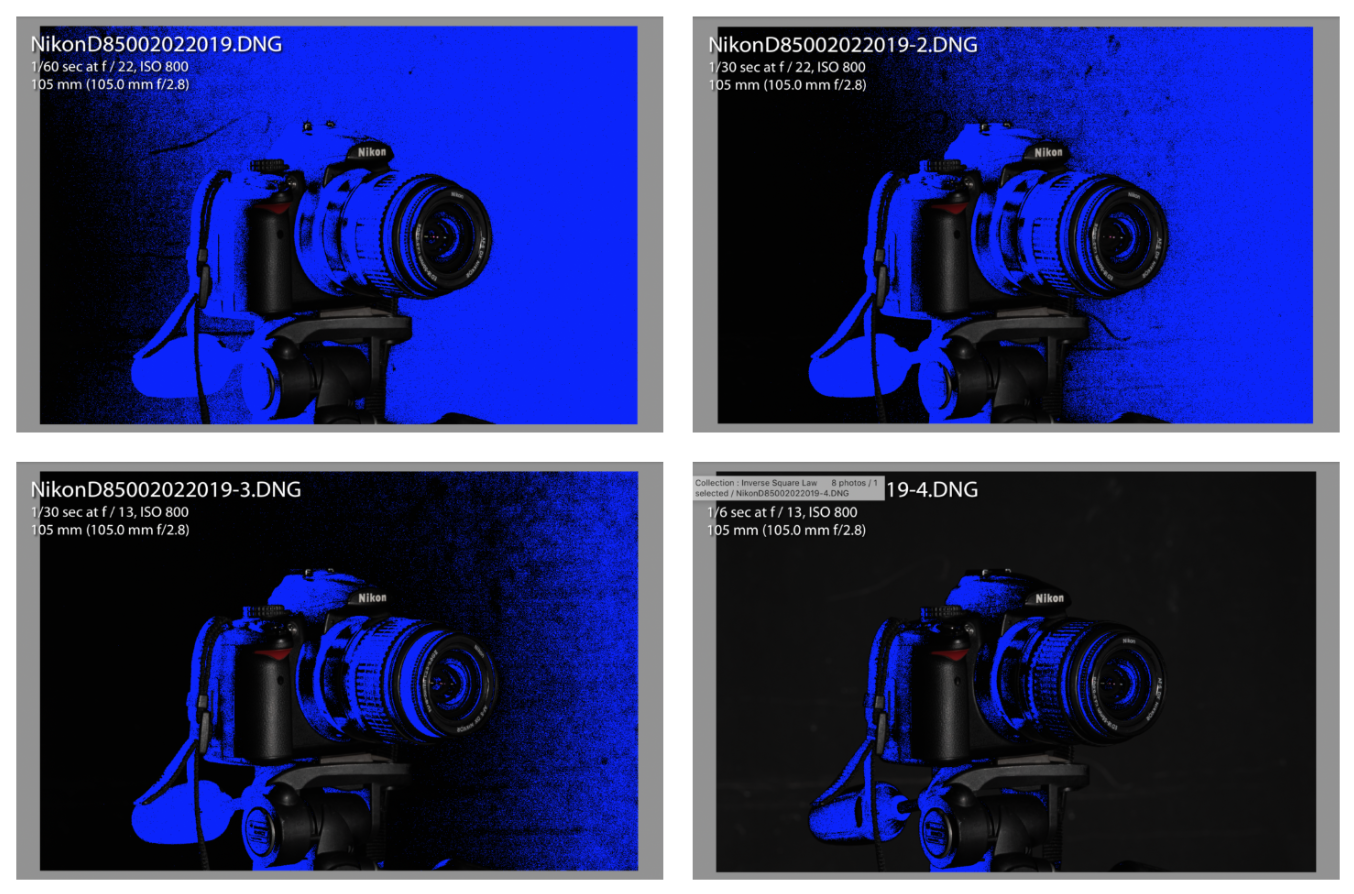
In the photographs made by the D850, it's clear to see the darkest shadows opening up more the further the small light source gets, as shown by the shadow clippings in Lightroom below.

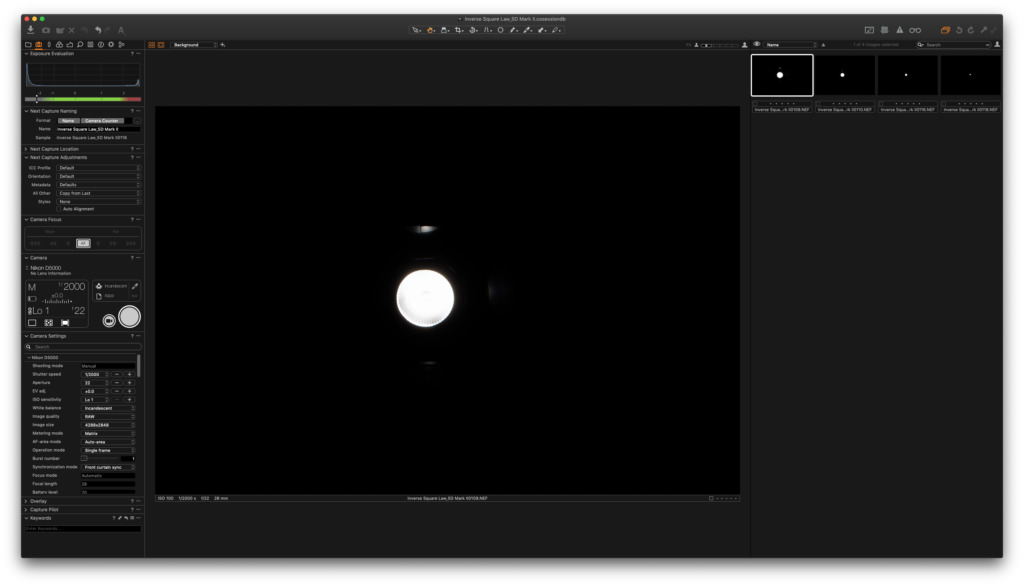
In the photographs of the light source made by the Nikon D5000, it's apparent that the light source is getting 75% smaller, and consequently, we are left with 25% of the light from the previous shot. To accommodate for this loss of light, we need to let in twice as much light.
One thing that surprised me was the jump from 8 feet to 16 feet. In the photograph of the subject at 8 feet, the background is still hardly visible, mostly dark shadows. At 16 feet, the background, although still dark, is almost completely visible.


Subscribe to:
Posts (Atom)